Why write a letter at 18
Eighteen is the legal threshold into adulthood. Cards get read once; a letter is the one gift they can reread at 25, and again at 40, in your words and your handwriting. It doesn't need to be clever. It needs to be true, and it needs to be yours.
Dimitrios Tsakmakis served as a special forces paratrooper in the army and is now a serving police officer in Greece, with seven years in the counter-terrorism unit. He wrote All the Knowledge I Want to Bestow Upon My Children as a letter to the children he hopes to have; it became a five-volume series.
The six parts of an 18th-birthday letter
Each part has a job, a few prompts to get you started, and one thing to avoid. Answer one or two prompts per part, not all of them.
1. Where you are right now
Set the scene: the date, the place, what is happening today. It tells them who was writing, and when.
- Where am I sitting as I write this?
- What did you do this morning?
- What is happening in our home this week?
Avoid: starting with advice.
2. One memory only you could tell
One scene, told fully. Something they were too young to remember, or never knew you noticed.
- When did I first see the adult you'd become?
- What's a small moment you've forgotten that I haven't?
- What was said, and what did the room look like?
Avoid: a list of milestones.
3. What I see in you
Name one quality, and give the evidence for it.
- What do you do when nobody is watching?
- What are you better at than I was at 18?
- When did you surprise me?
Avoid: praising results only (grades, trophies).
4. What I want you to carry
The values you hope they take with them. Use your own, or borrow the Three Laws as a frame. Parents may use their own values instead; the Three Laws are one possible frame:
I. Know what is in your control and what is not. II. Do what is right, not what is easy. III. Protect your own, but do not take what is not yours.
- What's one thing you know is in your control, and one you'll have to let go? (Law I)
- When did you choose the harder right thing? (Law II)
- Who will you protect, and what will you never take? (Law III)
Avoid: more than three lessons.
5. What I got wrong
One honest line. Keep it brief and kind: it should lighten the letter, not hand them a burden.
- What would I do differently?
- What do I want to apologise for, or thank you for?
- What did you teach me?
Avoid: a long confession.
6. What you can always count on
A promise, and a sign-off with the name they call you.
- What will I always do, at any hour?
- What don't you ever have to earn?
- How do I sign this: the name you call me?
Avoid: conditions or expectations to live up to.
Practical notes
- 300–700 words is plenty. That's our advice, not a rule.
- Write it over a few evenings rather than in one sitting.
- Handwrite the final copy if you can.
- Read it once out loud before you give it.
- Give it privately, not at the party.
An 18th-birthday letter doesn't need to be long. One specific memory, one honest line and one promise matter more than length; a page or two, handwritten if possible, is enough.
A worked example (structure, not a letter to copy)
This is the skeleton of one letter: six short paragraphs, in proportion. Fill each bracket with your own words.
[Part 1: the date, where you are writing, one detail from today. Two sentences.]
“I want you to have my voice, my mistakes, and what I learned from them. Not someone else's version. Mine.”
— Dimitrios Tsakmakis, Foundation (Volume I), Chapter 1, “Why I Write”
[Part 2: the evening you … — one scene, what was said, what you noticed.]
[Part 3: the one quality you see in them, and the moment that proved it.]
[Part 4: up to three things you want them to carry, each in one line.]
[Part 5: one thing you would do differently, said kindly.]
[Part 6: what they can always count on from you, then your sign-off.]
“This book is my letter to you. I hope you never need it. But if you do, it will be here.”
— Dimitrios Tsakmakis, Foundation (Volume I), Chapter 1, “Why I Write”
His letter became a five-volume series. Yours can be one page. See Foundation (Volume I) →
The fill-in template (free download)
Two ways to use it, both free and with no email needed: print the PDF and handwrite your letter, or make your own copy of the Google Doc and type it over a few evenings. Both have the six parts, the prompts and space to write.
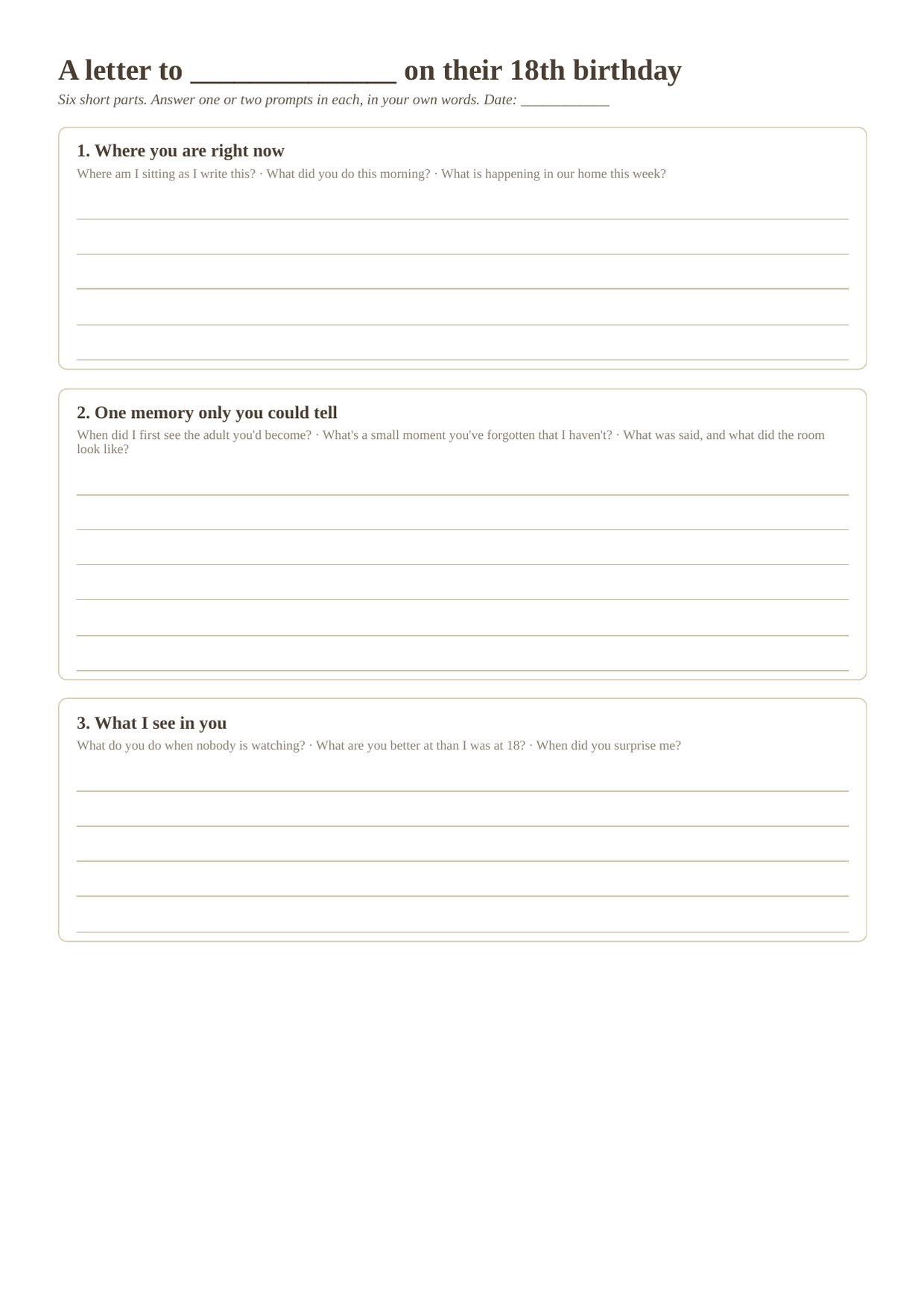
The Google Doc button makes a copy in your own Google Drive; it never changes the original.
Read the template as text
A letter to ______ on their 18th birthday
1. Where you are right now
- Where am I sitting as I write this?
- What did you do this morning?
- What is happening in our home this week?
2. One memory only you could tell
- When did I first see the adult you'd become?
- What's a small moment you've forgotten that I haven't?
- What was said, and what did the room look like?
3. What I see in you
- What do you do when nobody is watching?
- What are you better at than I was at 18?
- When did you surprise me?
4. What I want you to carry
- What's one thing you know is in your control, and one you'll have to let go? (Law I)
- When did you choose the harder right thing? (Law II)
- Who will you protect, and what will you never take? (Law III)
5. What I got wrong
- What would I do differently?
- What do I want to apologise for, or thank you for?
- What did you teach me?
6. What you can always count on
- What will I always do, at any hour?
- What don't you ever have to earn?
- How do I sign this: the name you call me?
Son or daughter: does the letter change?
No. The six parts work for any child, from mum or from dad. What changes is the memory you choose and the quality you name, because those belong to this one person. Write to the child in front of you, not to an idea of what a son or a daughter should be.
The long version of this letter
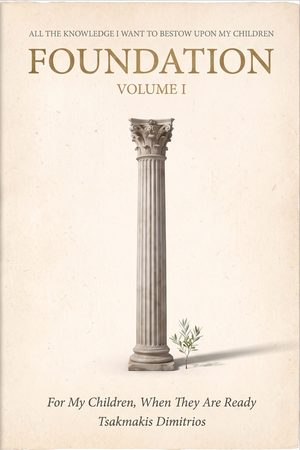
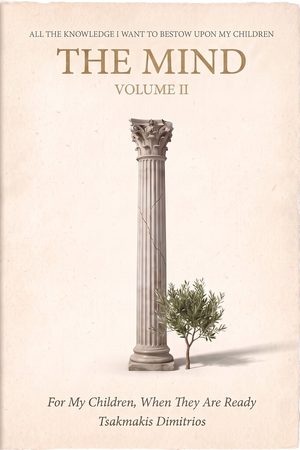
The series began as this kind of letter. Foundation (Volume I) teaches the Three Laws and ends its chapters with short practical exercises a parent and an 18-year-old can do together. The Mind (Volume II) trains clear thinking. Both are out in paperback and ebook (PDF and EPUB). Volume III, The World, is coming; get a note when it lands.
A gift idea: tuck your letter inside a copy of Foundation.
Για αναγνώστες από την Ελλάδα: το βιβλίο είναι στα αγγλικά, με σύντομα, άμεσα κεφάλαια και αληθινές ιστορίες. Για κορίτσια και αγόρια από 12 ετών που διαβάζουν αγγλικά και για τους γονείς τους. Η ελληνική σειρά θα ακολουθήσει, αφού κυκλοφορήσουν και οι πέντε αγγλικοί τόμοι.
Questions parents ask
What should I write in a letter to my son on his 18th birthday?
Write six short parts: where you are as you write, one memory only you could tell, one quality you see in him, what you want him to carry, one thing you got wrong, and what he can always count on from you. Use your own words and one real scene rather than general advice.
What should I write to my daughter on her 18th birthday?
The same six parts work for a daughter: where you are, one memory, one quality you see in her, what you want her to carry, one honest line about what you got wrong, and a promise. What changes from child to child is the memory and the quality, not the structure.
How long should an 18th-birthday letter be?
An 18th-birthday letter doesn't need to be long. One specific memory, one honest line and one promise matter more than length; a page or two, handwritten if possible, is enough. As a rough guide, 300 to 700 words is plenty.
Should I handwrite it or type it?
Draft it however suits you, over a few evenings. If you can, handwrite the final copy: your handwriting is part of the letter. The free template comes as a printable PDF for handwriting and as a Google Doc for drafting.
When should I give it to them?
Give it privately rather than at the party, on the day or just before. Some parents tuck it inside a gift. Let them read it alone, in their own time.
What if I'm not good with words?
Short and true beats long and polished. Answer one prompt per part in plain sentences, read it once out loud, and cut anything that doesn't sound like you. A single real memory says more than any quotation.
Can both parents write one letter together?
Yes. Either share the six parts, each writing the sections you feel strongest about, or write two shorter letters and give them together. Keep each voice recognisable rather than blending them into one.
What shouldn't I put in the letter?
Leave out conditions, expectations to live up to, long lists of lessons, and confessions that would burden them. Avoid praising only results like grades. Keep the letter about them, and keep it kind.
Questions about the books →